RESERVATIONS & HOSPITALITY
Preventing no-shows at your restaurant: 5 practical tips
An empty reserved table costs you revenue. Discover how to reduce no-shows and protect your income.
Published by team FRANK • 4-minute read
In this article
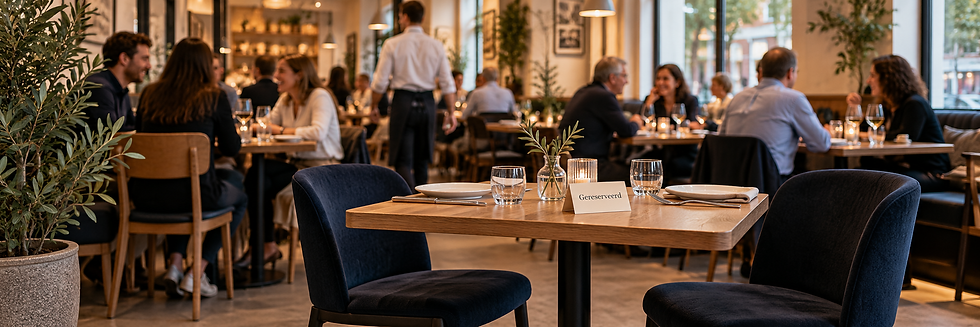
You’ve held a table, prepared the mise en place and scheduled your team. But the guests don’t arrive. No call, no cancellation. Meanwhile, you may have turned other guests away.
A no-show affects more than that table’s revenue. You’ve planned your purchasing and staffing around an expected number of guests.
Especially for groups or restaurants with few tables, one missed booking can make a big difference. How can you prevent no-shows without making booking unnecessarily complicated?
Start with where things go wrong. Does a guest forget their booking? Is cancelling too difficult? Or are there no clear terms explaining what happens if someone doesn’t arrive?
These five tips help make bookings more reliable and give guests room to communicate changes in time.
01. Make cancelling easy
Plans change. A guest gets ill, the babysitter cancels or a meeting runs late. You have little control over that. But you can make it easier for guests to let you know.
If a guest has to find a phone number and then can’t reach anyone, they may never cancel. A direct option to cancel online removes that barrier.
Clearly explain how to change or cancel a booking in your confirmation. Make this information easy to find on your website too.
An early cancellation gives you a chance to offer the table again. If you only discover a no-show after the expected arrival time, that opportunity is much smaller.
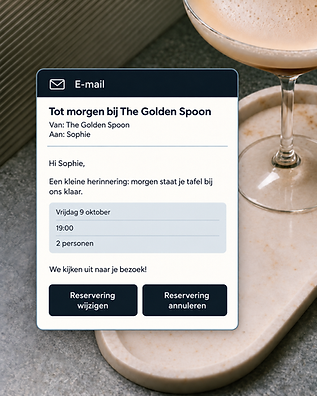
02. Send a clear booking reminder
A booking made weeks ago can easily slip someone’s mind. A reminder brings the visit back to their attention and gives guests a chance to check their plans.
A good booking reminder includes the information guests need:
-
The date and time.
-
The number of guests.
-
Your restaurant’s address.
-
A clear way to change or cancel.
-
Any terms attached to the booking.
Keep the message short and friendly. Guests should see at a glance what’s planned and what to do if anything changes.
With FRANK, you can keep guests informed through automatic booking confirmations and reminders. This helps your team communicate consistently, even when it’s busy.
What you can do now
Check when your reminder is sent.
Do guests still have enough time to request a change? Does your restaurant then have a realistic chance to fill a cancelled table?
The right timing depends on your restaurant and cancellation terms.
Consider when a reminder can make the biggest difference to your service.
03. Use deposits where an empty table has a big impact
A group of eight not showing up has a different impact from a table for two. Especially if you’ve bought ingredients specifically or held several tables.
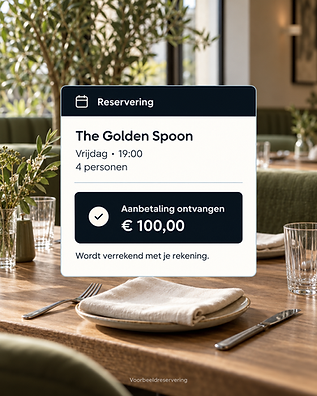
A deposit can encourage greater commitment. Guests pay an amount when booking, which you deduct from their bill according to your terms.
You could consider deposits for:
-
Group bookings.
-
Special menus requiring advance purchasing.
-
Holidays or special events.
-
Services where an empty table is hard to refill.
First decide which bookings need extra security. This helps you create a targeted policy that reflects the impact on your restaurant.
Through the Mollie integration, FRANK supports deposits during booking. The payment is linked to the relevant reservation, keeping everything clear for your team.
What you can do now
Choose one booking type where a no-show costs you relatively more.
Set a suitable deposit and clearly explain beforehand how it will be deducted and which cancellation terms apply.
Then monitor its effect on booking.
Do more guests turn up? Does your team get questions about payment? Are bookings still easy to complete?
04. Use credit card guarantees
Want extra security without asking for an upfront deposit? A credit card guarantee may suit your booking policy.
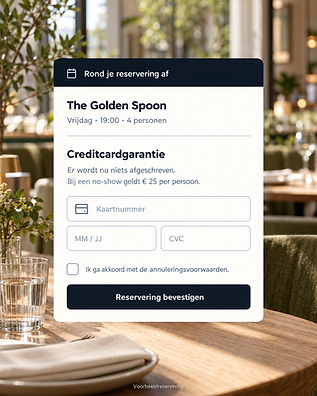
With a credit card guarantee, guests authorise a charge under agreed conditions when booking. For example, if they don’t show up or cancel after the agreed deadline.
With a deposit, you receive payment immediately. A credit card guarantee allows for a possible charge later.
FRANK supports credit card guarantees through the Mollie integration. This lets you include financial security in the booking process.
Communicate clear terms
Before completing a booking, guests must understand:
-
When charges may apply.
-
The amount and whether it applies per person or per booking.
-
The deadline for cancelling without those charges.
-
How changes to the number of guests are handled.
Use plain language. Guests need to understand what they’re agreeing to.
05. Track when no-shows happen
A large group not showing up often stays with you longer than a trouble-free week. This can make no-shows feel widespread, even if they mainly affect one type of booking.
Recording no-shows accurately helps you make more targeted decisions.
Look at the day and service, party size, booking channel and time between booking and visiting.
Distinguish between a no-show and a cancellation. A guest cancelling well in advance needs a different approach from someone who doesn’t arrive without notice. Track late cancellations separately too.
FRANK provides insight into bookings and no-shows. Use this information to decide where reminders, deposits or credit card guarantees are most relevant.
Which booking policy suits your restaurant?
Start with the impact of an empty table.
Do you have many small bookings and can usually fill cancelled tables? Clear confirmations, reminders and easy cancellation can be a good starting point.
Do you work with larger groups, limited capacity or menus with upfront costs? A deposit or credit card guarantee can offer extra security.
Introduce a targeted change and monitor its effect. The aim is for guests to take bookings seriously and communicate changes in time, while keeping booking easy.